30 March 2026

Deepfakes & Synthetic Identities: The Next Identity Governance Crisis

Imagine a stranger walks into your bank, hands over perfect documents, and walks out with a hefty loan. All without stealing your details. This isn’t a movie plot. It’s the reality of deepfakes and synthetic identities shaking up how we prove who we are online.

Deepfakes use AI to swap faces in videos or mimic voices with eerie accuracy. Synthetic identities go further. They craft fake people from bits of real data, like a made-up name paired with a stolen Social Security number. These threats hit hard in our digital world, where trust hinges on quick checks.

Current identity governance setups fall short. They rely on old methods that can’t keep up with AI’s tricks. We face an identity governance crisis unless we adapt fast. Deepfake threats and synthetic identity fraud demand new rules to protect our digital lives.

Understanding the Evolution of Identity Synthesis

The Mechanics of Generative AI in Identity Creation

Generative AI powers this shift. Tools like GANs pit two neural networks against each other to create realistic images. Diffusion models refine noise into clear photos or videos step by step.

These techs make fakes easy to build. Anyone with a laptop and free software can generate a deepfake video in minutes. No need for fancy skills anymore.

The market for deepfake tools exploded. By 2025, reports show over 96% growth in accessible platforms. This lets small-time crooks flood systems with bogus profiles.

Synthetic Identities vs. Stolen Identities

Stolen identities grab real info from breaches. Hackers use your email and password to cause harm. Synthetic ones build from scratch. They mix fake names with real fragments, like a birthdate from one source and an address from another.

The key difference? Synthetics dodge alerts tied to real people. They slip past checks designed for known victims. Traditional theft leaves traces; these ghosts do not.

Take financial fraud cases. In 2024, US banks spotted synthetic identities in 20% of loan apps, per industry data. Real examples show gangs creating hundreds to siphon funds without touching live victims.

The Growing Threat Vector: Scale and Velocity

Automation changes everything. Bad actors run scripts to spit out thousands of profiles at once. One tool can generate IDs, photos, and backstories in hours.

This speed overwhelms defences. Banks process millions of apps daily; spotting fakes one by one fails. Velocity means attacks hit from all sides before teams react.

Think of it like a flood. A few leaks you can plug. But a torrent? It drowns the barriers. By early 2026, experts predict synthetic fraud costs could top £10 billion yearly in the UK alone.

The Failure Points in Current Identity Governance Frameworks

Authentication Overload: Biometrics and MFA Vulnerabilities

Biometrics promise security with fingerprints or face scans. But deepfakes fool them. A high-quality video clone bypasses liveness tests that check blinks or head turns.

MFA adds layers, like SMS codes or app pushes. Voice deepfakes crack phone verifications. Attackers mimic tones to approve transfers.

Cybersecurity firms report stark numbers. Tests show 80% of basic biometric systems fail against pro deepfakes. We need tougher checks to match AI’s leap.

KYC/AML Compliance Gaps in Digital Onboarding

KYC rules force firms to verify customers. AML fights money laundering with document scans. Yet AI forges IDs that look spot-on passports with holograms or utility bills.

Online onboarding speeds things up. But rushed reviews miss subtle flaws. Synthetic docs pass initial scans, letting fraudsters open accounts.

Regulators warn of gaps. In the EU, 2025 audits found 15% of digital KYC fails bypassed by AI fakes. This erodes trust in core processes.

Fragmentation Across Enterprise Silos

Organisations split identity checks. HR handles hires, finance does loans, security watches access. No single view spots a fake profile jumping departments.

This silo trap hides patterns. A synthetic identity might apply for a job, then a credit line, all unchecked. Data stays locked in teams.

Breaking walls matters. Unified systems could flag odd behaviours across the board. Without it, threats grow unchecked.

Real-World Ramifications: Case Studies in Identity Crisis

Financial Fraud and Credit Application Exploitation

Synthetic identities thrive in finance. Crooks build profiles to apply for loans or cards. They boost credit scores with fake payments, then max out limits.

Banks lose big. A 2025 Federal Reserve report pegged synthetic fraud at £5 billion in US losses. In the UK, similar scams hit mortgage lenders hard.

One case involved a ring creating 1,000 profiles. They secured £2 million before detection. Such exploits drain resources and hike costs for everyone.

Corporate Espionage and CEO Fraud via Voice Deepfakes

Voice deepfakes target execs. Scammers clone a CEO’s tone from public clips. They call staff, demand wire transfers for “urgent deals.”

Impersonation fraud spikes. A 2024 incident saw a firm lose £20 million to a deepfake audio trick. C-suite deepfake attacks fool even trained ears.

These breaches steal more than money. They leak secrets, damage reps. Firms scramble to train on audio cues, but tech races ahead.

Erosion of Digital Trust and Information Warfare

Deepfakes blur truth online. Fake videos sway opinions, rig elections, or spark unrest. Citizens doubt news, videos, even family calls.

This hits society wide. In 2025 UK polls, 60% feared deepfakes in voting. Synthetic media fuels divides, weakens democracy.

Trust crumbles when fakes spread fast. We question sources, slowing decisions. The cost? A fractured public square.

Strategic Imperatives for Future Identity Governance

Implementing Continuous, Multi-Layered Verification

Stop at login? That’s not enough. Use ongoing checks like keystroke patterns or mouse moves. These behavioural biometrics spot fakes in action.

Layer network data too. Track device histories and location shifts. Anomalies flag risks mid-session.

Try passive proofing. Let systems watch without user hassle. It catches drifts from normal behaviour, key against synthetics.

  • Monitor typing speed for voice mismatches.
  • Cross-check IP with claimed locations.
  • Alert on sudden profile changes.

Leveraging AI to Fight AI: Detection Technology Adoption

AI detects its own flaws. Tools scan videos for pixel glitches or audio for odd frequencies. They learn from vast fake samples.

Invest in specialists. For video, check frame inconsistencies. Voice tools probe breath patterns.

Free AI detectors offer starts. Reviews of top options show they catch 90% of basics, though pros need paid upgrades for deepfakes.

Adopt now. Tailor to needs text for emails, video for calls. This arms you against the tide.

Establishing Robust Identity Digital Resilience Frameworks

Build response plans. When a synthetic slips in, isolate fast. Cut access, trace paths, notify stakes.

Speed counts. Playbooks drill teams on containment. Test quarterly to sharpen skills.

Standards bodies push ahead. By 2026, expect EU rules on synthetic defence. Join groups shaping them.

  • Draft breach protocols.
  • Train cross-department teams.
  • Audit tools yearly.

Forward thinkers prepare. Resilience turns crises into lessons.

Conclusion: Securing the Digital Self in the Age of Fabrication

Deepfakes and synthetic identities spread quick. They outpace old guards, creating an identity governance crisis. We must shift to match.

Key takeaway: Make checks ongoing, not one-off. Spot threats in real time.

Another: Smash silos. Track identities firm-wide for full views.

Prep now. It builds strength against smarter attacks tomorrow. Act to guard your digital self start with layered defences today.

Talk to us and see how Infosec K2K can help you secure workforce.
13 March 2026

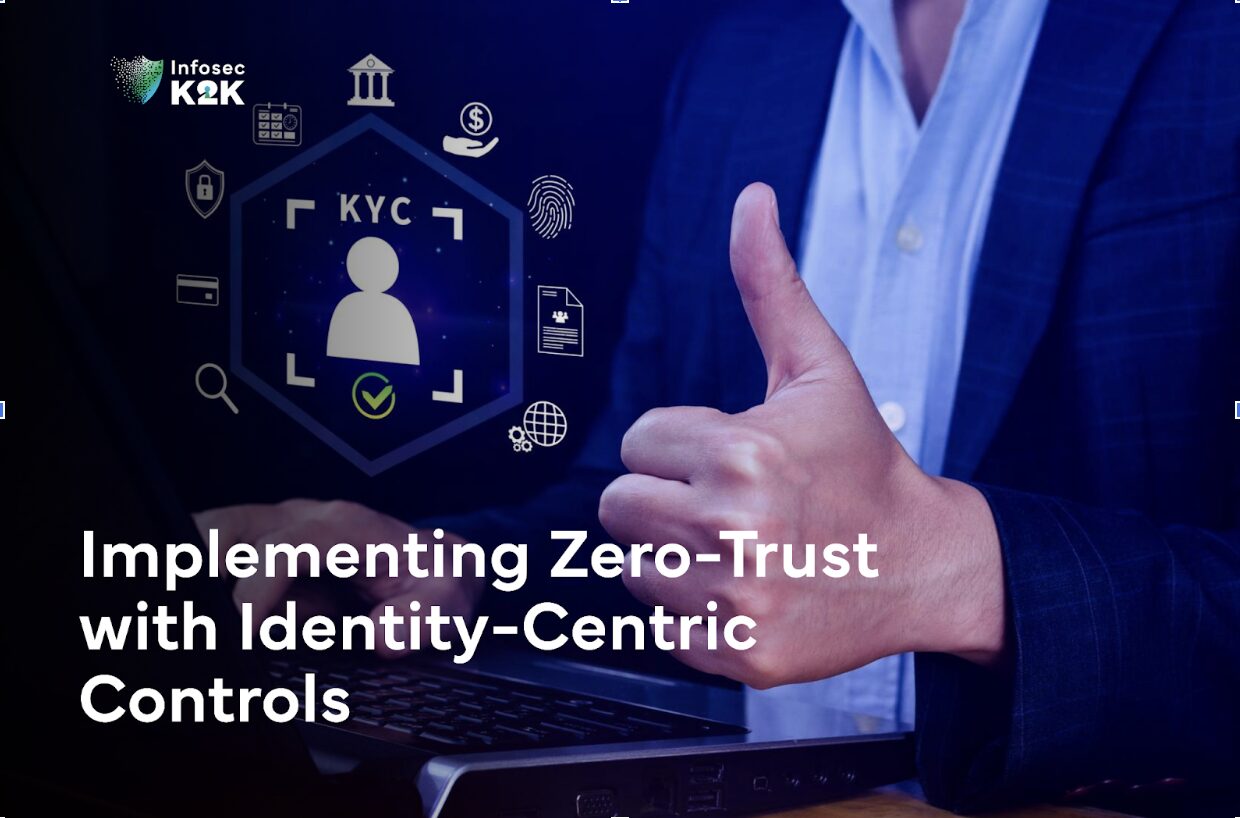
Implementing Zero-Trust with Identity-Centric Controls

Picture this: a hacker slips past your firewall like a ghost in the night. They roam free inside your network, grabbing sensitive data. Old-school defences no longer hold up. In our hybrid work setups and cloud systems, threats like ransomware and sneaky insiders demand a fresh approach. That’s where zero trust steps in. It’s a full strategy that checks every access request, no matter who or where it comes from. Traditional VPNs and firewalls fall short here. They guard the edges, but once inside, you’re on your own. Zero trust flips that script by focusing on identity the who behind each action.

This guide dives into building zero trust around identity-centric controls. You’ll see how to treat identity as your main defence line. Identity and access management, or IAM, sits at the heart of it all. It verifies users, devices, and even apps before granting any entry. With rising attacks think 300% jump in ransomware last year alone granular checks are a must. Let’s break it down step by step.

Deconstructing Zero Trust Architecture (ZTA) Through an Identity Lens

Zero trust architecture, or ZTA, changes how we secure systems. It assumes threats hide everywhere. You verify each step, never assume safety. This shift puts identity front and centre. No more blind trust based on network spots.

Core Tenets of Zero Trust: Never Trust, Always Verify

Zero trust rests on simple rules. First, assume a breach has happened. Check everything twice. Second, verify each request with clear proof. Third, limit access to the bare minimum needed. These ideas keep risks low.

Identity plays the lead role in verification. Without solid proof of who you are, no access follows. This stops attackers from using stolen logins. Teams that apply these tenets see fewer breaches. For example, a bank cut incidents by 40% after full rollout.

Defining the Zero Trust Policy Engine (PE) and Policy Administrator (PA)

The policy engine decides if access gets granted. It looks at identity data, like your role or device status. The policy administrator sets the rules for that engine. Together, they form ZTA’s brain.

In identity-centric setups, the PE pulls from your IAM system. It checks against stored facts about you. The PA then pushes those choices to enforcement points. This duo ensures decisions stay consistent across clouds and on-site servers. Without them, zero trust crumbles into chaos.

Policy enforcement points, or PEPs, act on these calls. They block or allow based on PE output. Think of it as a smart gatekeeper tied to identity.

Contextual Access: Moving Beyond Simple Authentication

Basic logins won’t cut it anymore. Zero trust needs context for smart choices. Factors like your job role, device health, where you log in, the time, and data type all matter.

Identity context turns access into a puzzle. Each piece must fit. A sales rep from home at midnight? Extra checks apply. This stops odd behaviour early. Studies show contextual rules block 85% more risky logins than passwords alone.

You build this by linking identity tools with risk signals. Real-time data keeps trust levels fresh. It’s like having a watchful eye on every move.

Micro-segmentation as the Enforcement Mechanism

Micro-segmentation splits your network into tiny zones. Each gets its own rules based on verified identities. No more wide-open paths for intruders.

Identity policies draw these lines. Users or services prove who they are before crossing. Forget IP addresses; they change too fast. A developer gets code access only after identity check.

This setup isolates threats. If one zone falls, others stay safe. Companies using it report 50% faster breach containment. Tools like service meshes help enforce these in clouds.

Elevating Identity Governance for Zero Trust Success

A weak identity system dooms zero trust. Make IAM your rock-solid base. It holds all user and device truths. From there, build controls that adapt and enforce.

Establishing a Strong Identity Foundation with Robust IAM

Your identity provider, or IdP, acts as the single truth source. It tracks who has rights and why. If it fails, zero trust unravels.

Start by cleaning up user data. Remove old accounts. Link them to real roles. This foundation supports all ZTA parts. Teams with strong IAM cut access errors by 60%.

Integrate IdP with other tools for seamless checks. It’s the glue that holds identity-centric controls together.

Implementing Strong Authentication: MFA Everywhere

Roll out multi-factor authentication, or MFA, across the board. Make it phishing-proof with methods like FIDO2 keys. These beat texts or apps hands down.

MFA stops most account takeovers. Data shows it blocks over 99% of automated attacks. Train your staff to use it daily. Start with high-risk spots like email.

Push for hardware tokens where possible. They tie to your device, adding layers. No excuses make MFA the entry ticket.

Continuous Authorization and Adaptive Access Policies

Static rights are outdated. Use dynamic policies that check trust ongoing. Reassess based on live signals, like sudden location shifts.

If your device’s health drops, access shrinks. This adaptive approach fits zero trust perfectly. It reacts to changes mid-session.

Tools scan for risks in real time. A policy might lock finance files if anomaly pops up. This keeps your setup nimble and safe.

The Role of Privileged Access Management (PAM) in Zero Trust

Admin accounts pose big dangers. Use PAM to lock them down tight. Grant just-in-time access only when needed.

Monitor sessions closely. Record actions for review. This enforces least privilege without slowing work.

JIT means rights vanish after use. No lingering keys for hackers. Firms with PAM see 70% fewer privilege abuses.

Integrating Device Trust and Workload Identity

Humans aren’t the only players. Devices and apps need identity checks too. They form a huge attack surface in clouds.

Identity-Centric Security Extends Beyond Human Users

Non-human identities, like APIs and bots, often outnumber people. Secure them with the same zero trust rules. Verify before any talk.

This covers service accounts in containers. Weak spots here lead to big leaks. Treat them as first-class identities.

Device Posture Assessment: Health as an Identity Attribute

Check device health before trust. Use endpoint tools to scan for patches and threats. Fold results into your identity profile.

A clean laptop scores high; one with malware gets low access. This posture check acts like an identity badge.

Link EDR systems to your PE. It updates scores live. Devices failing checks face blocks or alerts.

Workload Identity Federation and Non-Human Access Management

For machine chats, ditch static passwords. Use certificates or managed identities. Federation lets workloads prove themselves across systems.

Service meshes add encryption and checks. No secrets to steal means fewer breaks.

In clouds like AWS, built-in identities simplify this. Rotate creds often. This cuts non-human risks by half.

Integrating Identity Data with Security Information and Event Management (SIEM)

Feed identity logs into SIEM for full views. Track logins, requests, and blocks. Spot odd patterns fast.

Central logs help hunt threats. A spike in failed auths? Dig in.

This setup aids compliance, too. Auditors love clear trails.

Operationalizing Zero Trust: Identity-Based Access Enforcement

Turn plans into action. Enforce rules across mixed setups on-prem, cloud, SaaS.

Practical Implementation: From Policy Creation to Enforcement Points

Craft policies in your PA. Test them small, then scale. Tie to identity data for accuracy.

PEPs sit at app fronts, checking IDs first. This works anywhere.

Adopting Identity-Aware Proxies (IAP) and Software-Defined Perimeters (SDP)

IAPs guard apps by ID, not network. No VPN needed; verify then connect.

SDPs hide resources until proven. They build perimeters around identities.

Both fit hybrid worlds. A remote worker accesses CRM? IAP checks role and device first.

Leveraging Attribute-Based Access Control (ABAC) for Granularity

RBAC uses roles alone too broad for zero trust. ABAC mixes attributes for precise calls.

Your location, time, and clearance decide. This granularity blocks over-shares.

Build ABAC on identity facts. It’s flexible for growing teams.

Visibility and Auditing: Proving Compliance with Identity Trails

Log every access who, what, when, why. Context fills the why.

Audit trails prove you follow rules. Post-breach, they guide fixes.

Tools auto-generate reports. Keep them simple and searchable.

Conclusion: The Future State of Explicit Verification

Zero trust thrives on strong identity layers. We’ve covered the shift to identity-centric controls, from core tenets to daily enforcement. It’s not a one-off task; maturity builds over time.

Success comes when identity drives every decision. Verify always, trust never. This approach shrinks risks in our connected world.

  • Identity forms the main control plane make it priority one.
  • MFA and device checks are must-haves for any setup.
  • Ongoing verification beats old implicit trust every time.

Ready to strengthen your defences? Assess your IAM today and start the zero trust path. Your data will thank you.

13 February 2026

Shifting from scans to real-time risk prioritization for compliance.

Imagine your compliance team scrambling after a quarterly scan uncovers a major gap. Threats move fast in 2026, and rules change even quicker. Old scans give you a picture from the past, not the risks you face right now.

This lag leaves organisations exposed. You need a better way. Real-time risk prioritisation for compliance means using live data to spot and rank threats by their true impact on your business. It turns compliance into an ongoing process, not a once-in-a-while check.

The Limitations of Traditional Compliance Scanning

Static scans once worked fine. Now, they fall short in a world of constant change. Businesses face daily shifts in tech and threats that make old methods risky.

The Audit Lag: Why Static Reports Don’t Reflect Current Reality

Compliance scans often run every three months or once a year. In that time, new vulnerabilities pop up. A server might sit with a flaw for months before anyone notices.

Remediation takes even longer. Teams backlog fixes based on the scan date. By then, attackers could have struck.

This delay creates a blind spot. Real threats build up unseen. You end up reacting instead of staying ahead.

False Positives and Alert Fatigue in Volume-Based Scanning

Tools flood teams with alerts from bulk scans. Many turn out false alarms. Security staff waste hours sorting noise.

Critical issues hide in the flood. One study shows teams ignore up to 40% of alerts due to overload. This burnout hits productivity hard.

Costs add up too. Time on low-risk items pulls focus from real dangers. Your budget drains on busywork.

Compliance vs. Actual Security Posture Disconnect

Passing a scan does not mean you are safe. A system might meet one rule but fail in the bigger picture. Think of a database that checks out on access controls yet links to an outdated app.

Environmental factors matter. A compliant cloud setup could drift if traffic spikes. Dependencies across systems create hidden risks.

Scans check boxes. They miss how risks play out in daily ops. True security needs more than green lights.

Defining Real-Time Risk Prioritisation for Compliance

Shift to a live approach. Pull in data streams to weigh risks as they happen. This method keeps compliance tied to your actual operations.

Integrating Continuous Monitoring and Data Feeds

Start with steady data flows. Use configuration management databases to track assets. Add threat feeds for fresh intel on attacks.

Cloud tools like CSPM spot posture issues live. Vulnerability scanners run often via APIs. This setup feeds everything into one view.

No more silos. Data arrives in real time. Your team sees the full picture without manual pulls.

Contextualisation: Weighing Risk Against Business Impact

Score risks by more than just severity. CVSS gives a base, but add asset value. Is this server key to customer data?

Factor in sensitivity. PII or financial info raises stakes. Current threats, like active ransomware, boost urgency.

Build a weighted model. Assign points to each element. For example:

  • Asset criticality: 30%
  • Data type: 25%
  • Threat level: 45%

This ranks issues by real harm. Prioritise what hits your business hardest.

Automation in Triage and Initial Response

Automation handles the flood. Tag alerts by type and severity right away. High-risk ones create tickets in your system.

Route them to the right team. No waiting for reviews. Scripts can even apply basic fixes, like patching low-hanging fruit.

This speed cuts response time. Teams focus on tough calls. Real-time prioritisation works because machines do the grunt work.

Technological Pillars Enabling Continuous Compliance

Tech makes the shift possible. New tools bridge gaps in visibility. They turn data into action.

The Role of Extended Detection and Response (XDR) in Compliance Visibility

XDR pulls signals from everywhere. Endpoints, networks, clouds all in one spot. It links compliance slips to live threats.

Spot drift early. A config change might flag as non-compliant and tie to suspicious activity. No more guessing.

Teams get alerts with context. This holistic view speeds decisions. Compliance stays part of security, not separate.

Adopting Compliance-as-Code and Infrastructure-as-Code (IaC) Scanning

Catch issues before deploy. Scan IaC templates like Terraform files during code reviews. Tools check for compliant setups upfront.

This “shift left” stops problems at the source. Developers fix as they build. No big surprises in production.

Frameworks automate it. Run checks in CI/CD pipelines. Compliance becomes part of the dev flow.

Leveraging Machine Learning for Anomaly Detection in Configuration Drift

ML spots odd patterns fast. It learns your normal configs over time. Deviations signal potential breaches.

Rule-based tools miss subtle shifts. ML flags them early, like a slow creep in access rights. Response happens before exploits.

Train models on your data. They adapt to your setup. This beats static scans hands down.

Operationalising the Shift: Culture and Workflow Transformation

Tech alone won’t do it. People and processes must change. Build habits around live risks.

Bridging the Gap Between Security, IT Operations, and Compliance Teams

Share dashboards across groups. Everyone sees the same risks. Accountability grows when ownership is clear.

For instance, a firm built a joint view of compliance metrics. IT fixed configs while security watched threats. Results improved fast.

No finger-pointing. Teams align on priorities. This unity cuts silos and boosts fixes.

Creating Agile Remediation Sprints Focused on Prioritised Risk

Ditch slow patch cycles. Run short sprints on top risks. Tackle the “Top 10” each week based on live scores.

Hold daily stand-ups at the dashboard. Quick chats keep momentum. Teams adapt as risks shift.

This agile way matches threat speed. Fixes happen in days, not months. Your posture stays strong.

Demonstrating Value Through Real-Time Risk Reduction Metrics

Track MTTR for critical risks. Aim to shrink it below a week. Show drops in high-risk drifts over months.

Move past scan coverage stats. Focus on impact. Boards love numbers that tie to business safety.

Report wins simply. “We cut exposure by 25% this quarter.” This proves the shift pays off.

Conclusion

Old scans give snapshots. Real-time risk prioritisation brings live insight. It weighs threats by business hit and acts fast.

Key points stand out. Integrate data feeds for full views. Use automation and ML to stay ahead. Change workflows to make it stick.

Assess your setup now. Modern threats wait for no one. Invest in these tools the payoff beats the cost of a breach every time. Start your shift to continuous compliance today.


31 January 2026

Managing unauthorized employee AI tools to avoid GDPR breaches.

Picture this: in early 2025, a mid-sized UK firm faced a data scandal when staff fed customer emails into ChatGPT for quick summaries. The tool’s owner, OpenAI, trained its models on that input without clear permission. Suddenly, personal details spilled across borders, drawing fines from regulators. This story shows how fast generative AI has spread in offices. Workers love the speed boost, but bosses worry about the hidden dangers.

The real issue? Staff often plug sensitive info into unapproved AI platforms. Under GDPR, this counts as a risky data handoff. No checks mean no safeguards, leaving firms open to breaches. You need to spot these shadow tools early and set rules that fit the EU data law.

Understanding the GDPR Landscape for Unauthorized AI Usage

Defining Personal Data Processing in Third-Party AI Contexts

GDPR sees personal data as any info tied to a living person, like names or emails from Article 4(1). When your team types client notes into an external AI, it processes that data without your control. You become the controller, but the AI firm acts as processor yet without a contract, it’s a mess.

Think of it like lending your diary to a stranger. They might read it fine, but what if they copy pages? Prompts that seem harmless can slip in special categories of data, such as health details in a support chat. This blurs lines, turning quick help into a legal headache.

Firms must map these flows. Ask: does this AI touch EU resident info? If yes, treat it as processing, not just a chat.

Identifying GDPR Infringement Hotspots

Key spots for trouble include missing lawful basis under Article 6. Employees skip consent checks, assuming the tool is safe. Then, security falls short on Article 32—no encryption or access logs for that third-party site.

Data Protection Impact Assessments under Article 35 often get ignored too. Shadow AI sneaks in without review, especially for high-risk tasks like HR summaries. Regulators flag these as clear violations.

You spot patterns in audits: teams in sales or support lead the risks. Without oversight, one bad prompt triggers a chain of non-compliance.

Legal Consequences: Fines and Reputational Damage

GDPR fines scale up to 4% of global turnover for serious breaches under Article 83. A data leak from unvetted AI could hit millions for big players. Smaller outfits still face hefty penalties, plus probe costs.

Beyond cash, trust takes a hit. Customers ditch brands after leaks, as seen in past scandals like the 2023 Italian ChatGPT ban. Your rep suffers long-term.

Regulators like the ICO in the UK push hard on AI misuse. Ignore it, and you invite enforcement actions that drag on for years.

Mapping the Risks of Shadow AI Adoption

Data Exfiltration and Inadvertent Disclosure

Shadow AI lets data slip out fast. Staff enter trade secrets or staff records, and the tool’s backend grabs it for training. This sends IP and personal info to places like US servers, far from EU rules.

It’s like leaving your safe open in a busy street. AI firms often use inputs to improve models, unless you opt out and most don’t know to. Client lists or employee feedback become fuel for competitors.

You can’t track where that data ends up. Once out, it’s hard to pull back, raising breach report duties under GDPR.

Jurisdiction and Cross-Border Data Transfer Issues (Chapter V GDPR)

Tools hosted outside the EU, like most big AIs, demand strict transfers. Chapter V requires Standard Contractual Clauses or adequacy nods, but shadow use skips them all. Data flows free to non-safe spots, breaking rules.

Imagine shipping parcels without customs forms. If the AI’s in California, EU data needs protection layers that employees bypass. This voids any defence in a probe.

Firms face extra scrutiny if transfers hit restricted countries. No docs mean automatic fault.

Compliance Debt and Auditing Nightmares

Untracked AI builds hidden debt. You can’t prove accountability under Article 5(2) when auditors ask about data paths. Where did that sales report go after the prompt?

Audits turn chaotic without logs. Teams scramble to recall tools used months back. This snowballs into bigger fixes later.

Start with a data map now. List all inputs to spot gaps before they bite.

Detection Strategies for Unsanctioned AI Tools

Network Monitoring and Traffic Analysis

Watch your network for AI pings. Cloud Access Security Brokers spot links to sites like chat.openai.com. Firewalls flag odd data bursts, like large text uploads.

Set alerts for patterns: spikes in HTTPS to AI domains during work hours. This catches 70% of shadow use, per recent security reports.

Tools like these integrate with logs. Review weekly to block repeats.

Endpoint Detection and Visibility Gaps

Traditional antivirus misses web-based AI. Users access via browsers, dodging old defences. Add Data Loss Prevention that scans for keywords in outbound traffic.

Balance this with privacy don’t spy too deep. Monitor for risky patterns, like pasting long docs.

For better views, use browser extensions that log AI site visits. This fills gaps without full lockdowns.

Leveraging Internal Feedback Loops

Build trust with reporting lines. Set up anonymous tips for staff to flag tools they try for work boosts.

Run quick surveys: “What apps help your day?” This uncovers hidden gems early.

Reward safe shares. Turn whistleblowers into allies, cutting blind spots.

Establishing Proactive Governance and Acceptable Use Policies (AUP)

Developing a Clear, Granular AI Acceptable Use Policy

Craft an AUP that spells out bans. No PII in public AIs; get approval first for any tool. List penalties, from warnings to job loss.

Make it simple: one page with examples. “Don’t enter customer emails here—use our approved system.”

Roll it out via emails and meetings. Update yearly as AI changes.

The Approved AI Framework: Vetting and Vetting Tools

Use a step-by-step check for new tools. First, assess risks: does it handle personal data? Then, vet the vendor check privacy policies.

Sign Data Processing Agreements that match GDPR. Run a quick checklist: EU hosting? Transfer clauses?

If it passes, deploy with limits. This keeps innovation safe.

For deeper dives on spotting AI risks in content.

Implementing Technical Controls and Barriers

Go beyond blocks. Set up internal AI chats that keep data in-house, like custom LLMs on your servers.

Use proxies to filter AI access. Allow only vetted ones, routing others to safe versions.

Test these often. They cut risks while letting teams work smart.

Cultivating a Culture of AI Security Awareness

Mandatory, Role-Specific GDPR and AI Training

Tailor sessions to jobs. Sales folks learn about client data slips; HR covers employee records.

Use real cases: “See how this prompt leaked names?” Make it hands-on, not dry.

Run it quarterly. Track who attends to ensure all get it.

Continuous Reinforcement and Just-in-Time Alerts

Pop up warnings in apps. When you copy big text, a note says: “Check if this has personal info.”

Share quick tips via newsletters. “This week: safe AI prompts.”

This builds habits without nagging. Staff stay sharp on risks.

Conclusion: Shifting from Prohibition to Managed Integration

Unauthorized AI tools pose real threats under GDPR, from data leaks to big fines. But banning them outright stifles gains. Focus on smart rules, detection, and training to handle shadow AI right.

Key takeaways:

  • Map your data flows today to find hidden risks.
  • Roll out a clear AUP and vet tools before use.
  • Train staff with real examples to build safe habits.

Take these steps now. Your firm will innovate securely, dodging breaches and keeping trust intact. Start with a policy review this week what’s your first move?


16 January 2026

Step-by-Step Zero Trust rollout for cloud and hybrid European firms under NIS2

Imagine a cyber attack slipping past your firewalls like a thief in the night. Your cloud data and on-site servers lie exposed. For European firms handling cloud and hybrid setups, the NIS2 Directive turns this nightmare into a legal must-fix. It pushes organisations to build tougher defences. Traditional borders around networks no longer cut it in a world of remote work and scattered data. Zero Trust steps in as the key fix. It demands you check every access request, no matter where it comes from. This approach lines up with NIS2 Article 21 on risk controls. It helps cloud and hybrid teams stay safe and compliant across the EU.

Understanding the NIS2 Mandate and Zero Trust Alignment

Key NIS2 Security Requirements Applicable to Digital Infrastructure

NIS2 covers more ground than before. It hits essential services like energy and transport, plus important ones such as cloud providers. Article 21 calls for strong risk management. This means handling incidents fast, securing suppliers, and planning for business stops. Zero Trust fits right in. For example, supply chain checks need micro-segmentation to limit spread if a vendor fails.

You can map these rules to Zero Trust basics. Here’s a quick cross-reference:

  • Verify Explicitly: Ties to NIS2’s incident response. Always check users and devices before granting access.
  • Least Privilege Access: Matches supply chain security. Give only needed rights to cut risks from third parties.
  • Assume Breach: Aligns with business continuity. Plan as if attacks happen, so you recover quick.

This matrix shows how Zero Trust builds a full shield. It turns vague rules into clear steps.

The Core Tenets of Zero Trust in a Hybrid Cloud Context

Zero Trust rests on five main pillars: identity, devices, networks, applications, and data. In hybrid setups, you mix cloud services like IaaS from AWS with on-site legacy kit. PaaS tools add another layer. The big change? Move from trusting whole networks to focusing on who or what asks for access.

Think of it like a bank vault. No one gets in without ID, no matter if they’re inside the building. For European firms, this means identity sits at the centre. Cloud tenants use Azure AD, while on-prem and hybrid environments extend identity controls using CyberArk Identity for strong authentication and identity governance across IT and OT systems. This setup blocks easy jumps between systems. It keeps data safe in split environments.

Assessing Current State Maturity Against ZT Frameworks

Start by checking where you stand. Use NIST SP 800-207 as a guide. It outlines Zero Trust levels from basic to advanced. ENISA offers EU-focused tips on key elements like trust zones.

Run a full audit first. Look at your cloud configs and on-site networks. Score them on identity strength and access logs. Many firms find gaps in device checks or data flows. This baseline sets your rollout path. It ensures NIS2 compliance builds on real needs, not guesses.

Fix weak spots early. For instance, if VPNs rule your access, note that as a red flag. Frameworks help prioritise. They turn a messy hybrid into a solid base.

Phase One: Foundation and Identity Governance

Establishing Robust Identity and Access Management (IAM)

Identity forms the heart of Zero Trust. Centralise your IdPs to cover cloud and on-site. Azure AD works for Microsoft clouds; AWS IAM handles Amazon setups. Link on-prem with tools like Link on-prem systems using CyberArk Identity as the trusted identity layer for unified authentication, multi-factor authentication (MFA), and access governance across hybrid environments.

Roll out MFA everywhere. Every user and service account needs it. NIS2 makes this a must to stop basic hacks. Skip it, and you risk fines up to 2% of global turnover.

Go further with adaptive MFA. Check location, device state, and job role. If a login comes from a new spot at odd hours, demand extra proof. This keeps access tight without slowing work.

Device Posture Assessment and Compliance Validation

Devices must prove they’re safe before touching resources. Scan for updates, antivirus, and EDR tools. Cloud consoles count too laptops, phones, even IoT gear.

Set up MDM for mobiles. It enforces policies like encryption. EDR watches for threats in real time. Feed this data into your Zero Trust engine. Deny access if a device fails checks.

In hybrid firms, this catches risks from mixed gear. A patched on-site PC gets in; an old tablet stays out. This step blocks breaches at the edge.

Mapping Data Classification for Policy Enforcement

Data drives your policies. NIS2 protects key entity info, so label it all. Sort files in S3 buckets or on-prem shares as public, internal, or secret.

Use tools like Microsoft Purview or AWS Macie. They auto-tag based on content. High-risk data gets stricter rules.

This map guides access. Secret files need top checks; public ones less. It fits NIS2 by focusing protection where it counts. Review tags often as data moves.

Phase Two: Network Segmentation and Micro-Perimeters

Architecting Software-Defined Perimeters (SDP) Over Traditional VPNs

Ditch wide VPN tunnels especially in OT environments and replace them with ZTNA solutions like Cyolo to prevent lateral movement and maintain operational continuity.

SDP or ZTNA gives access only to needed apps. Users see nothing else.

Build perimeters around applications, not networks. For OT and industrial environments, Cyolo enables secure, identity-based ZTNA access without exposing critical systems. In clouds, it hides resources from scans.

This shift assumes breaches happen. It limits damage in hybrid setups. European firms cut lateral moves this way. Access stays just-in-time, based on who you are.

Implementing Micro-segmentation in Cloud Workloads

Break your cloud into small zones. Isolate VMs and containers with security groups. AWS uses VPCs; Azure has NSGs.

Add network tools for finer cuts. Third-party options like Illumio enforce rules between services. Only allowed flows pass.

In regulated sectors, this protects OT systems. A bank might fence trading apps from email servers. It stops ransomware jumps. For NIS2, it secures vital operations.

Controlling East-West Traffic Flow

East-west traffic means moves inside your network. Attackers love it for spread. Place PEPs between app layers. They check every hop.

Use cloud-native controls or agents on hosts. Block unless traffic matches rules. Service meshes like Istio help in Kubernetes.

This closes gaps in hybrids. On-prem to cloud flows get the same scrutiny. It enforces least privilege, key for NIS2 continuity.

Phase Three: Policy Automation and Continuous Verification

Defining Granular, Attribute-Based Access Control (ABAC) Policies

RBAC limits by role. ABAC adds smarts. It looks at user risk, data type, and time.

Build policies that shift. High-risk users get short sessions. Tools like SailPoint automate this across clouds.

In hybrids, ABAC handles the mess. It keeps privilege low as things change. NIS2 demands this for ongoing risk control.

Integrating Security Telemetry for Real-Time Risk Scoring

Pull logs from SIEM, EDR, and CSPM. They feed your PDP with trust scores.

Score based on signals: odd logins or failed patches. Low scores trigger blocks.

Set auto-fixes. Quarantine bad devices fast. This verifies trust non-stop. It meets NIS2’s quick response needs.

Securing the Software Supply Chain: Application Security Gates

NIS2 eyes suppliers hard. Secure your code pipeline, too. Scan for bugs and bad dependencies in CI/CD.

Use gates like Snyk or SonarQube. Block weak code from deployment.

Link to Zero Trust: only clean apps run. This protects hybrid deploys. It cuts supply chain risks at the source.

Governance, Documentation, and Auditing for NIS2 Success

Developing Comprehensive ZT Documentation for Auditors

Regulators want proof. Build a policy list, maps of segments, and identity flows.

Document how you classify data and enforce rules. Include audit logs.

Keep it current. NIS2 audits check for gaps. Good records show compliance.

Continuous Monitoring and Policy Drift Management

ZT needs watchdogs. Scan for changes in cloud rules or sneaky tweaks.

Tools like Prisma Cloud alert on drifts. Fix them quick to hold the line.

This keeps your baseline strong. It avoids NIS2 slips from neglect.

Employee Training and Cultural Adoption of the ‘Never Trust, Always Verify’ Mindset

People break defences. Train staff on new ways. Teach spotting phishing.

Run drills on reporting odd access. Make “verify first” the norm.

For NIS2, this covers org duties. It builds a team that spots threats.

Conclusion: The Future-Proof Hybrid Enterprise

You now have a clear path from old perimeters to Zero Trust strength. This rollout shields cloud and hybrid setups against NIS2 demands. It turns compliance into a business edge.

Key takeaways:

  • Audit your state now with NIST or ENISA guides.
  • Start with IAM and MFA for quick wins.
  • Automate policies to verify access always.
  • Train your team to own the security mindset.

Take that first audit step today. Your firm will thank you when threats bounce off. Contact experts if needed, and compliance waits for no one.


13 December 2025

Quantum Apocalypse: How Tomorrow’s Computers Threaten Today’s Encryption (And How to Prepare Now)

Introduction: A Countdown Has Already Begun

For decades, modern cybersecurity has relied on one simple premise: today’s computers are not powerful enough to break the encryption protecting our data.
But that assumption is changing rapidly.

Quantum computing, once a distant theoretical concept, is accelerating faster than expected. As governments, tech giants, and research labs race to achieve quantum advantage, security experts warn that a “Quantum Apocalypse” could unfold: a moment when quantum machines become powerful enough to crack the cryptographic systems that secure global communications, banking, healthcare, national infrastructure, and even government secrets.

This isn’t science fiction. It’s a real and approaching security crisis.

Why Quantum Computing Breaks Current Encryption

How classical encryption works today

Nearly all secure systems rely on public-key cryptography, especially RSA, ECC (Elliptic Curve Cryptography), and Diffie–Hellman. Their strength depends on one thing:
It takes classical computers too long to solve the underlying mathematical problems, such as integer factorisation or discrete logarithms.

Breaking RSA-2048, for instance, would take a classical supercomputer millions of years.

Enter quantum computing

Quantum machines use qubits capable of representing multiple states simultaneously which allows them to solve problems exponentially faster.

Two quantum algorithms make today’s encryption vulnerable:

  • Shor’s Algorithm – can break RSA, ECC, and DH in hours or minutes.

  • Grover’s Algorithm – reduces the security of symmetric keys (AES) by half.

In short:
When large-scale quantum computers arrive, today’s encryption will fail.

“Harvest Now, Decrypt Later” – The Threat Already Happening

Even though quantum computers cannot yet break encryption at scale, attackers don’t need to wait.

Nation-state actors are believed to be intercepting and storing encrypted data today, planning to decrypt it in the future once quantum machines are strong enough. This is known as:

Harvest Now, Decrypt Later (HNDL)

This threat is especially serious for:

  • Government communications

  • Intellectual property & R&D

  • Healthcare records

  • Banking & financial data

  • Critical infrastructure telemetry

  • Identity and authentication data

If these encrypted archives are decrypted years later, the consequences could be catastrophic affecting individuals, companies, and entire countries.

Who Is Preparing for the Quantum Transition?

Global Governments

  • The US NIST has already standardized post-quantum encryption algorithms (e.g., CRYSTALS-Kyber, Dilithium).

  • The EU and UK are drafting compliance mandates requiring organisations to become quantum-ready.

Technology Giants

Google, Amazon, Microsoft, IBM, and leading cloud providers are building early post-quantum prototypes.

Cybersecurity Agencies

ENISA, CISA, and NCSC (UK) have all issued warnings urging organisations to begin quantum transition planning now, not after quantum computers are fully capable.

What a Quantum Attack Could Break (Real-World Impact)

A functional quantum computer could instantly break:

🔓 TLS/HTTPS → exposing millions of secure web sessions
🔓 VPNs & authentication systems
🔓 Blockchain wallets & digital signatures
🔓 Secure email (PGP, S/MIME)
🔓 Payment systems and banking protocols
🔓 IoT and OT device authentication
🔓 Software updates allowing attackers to impersonate vendors

This isn’t just a cybersecurity problem, it’s a societal stability problem

How Businesses Can Prepare Today (A Quantum-Ready Roadmap)

Moving to quantum-safe security isn’t a single step it’s a multi-year transformation. Organisations should start now.

1. Conduct a Cryptographic Inventory

Identify all places where encryption is used:

  • Identity & access systems

  • Databases

  • Cloud workloads

  • Industrial OT systems

  • Network devices

  • Third-party applications

  • Certificates & signatures

You cannot protect what you cannot see.

2. Assess “Quantum Lifetimes” of Data

Ask:

  • How long must this data remain confidential?

  • Will it still matter in 5, 10, or 20 years?

If yes → it is vulnerable to HNDL attacks today.

3. Implement Crypto-Agility

Your systems must be able to swap algorithms without redesigning entire architectures.

This includes:

  • PKI upgrades

  • Certificate automation

  • Modular cryptographic frameworks

  • Vendor compliance checks

4. Begin Piloting Post-Quantum Cryptography (PQC)

Adopt NIST-approved algorithms:

  • CRYSTALS-Kyber (key exchange)

  • Dilithium (digital signatures)

  • SPHINCS+

Hybrid approaches (classical + PQC together) are recommended during transition.

5. Strengthen Identity & Access Security

Quantum threats also affect identity systems.

Move toward:

  • Zero-Trust

  • Passwordless authentication

  • Strong IAM governance

  • Endpoint Privilege Management (EPM)

  • OT identity segmentation

A strong identity layer reduces impact even if encryption is weakened.

6. Work With Quantum-Security Partners

Businesses cannot navigate this alone.

Infosec K2K supports organisations with:

  • Crypto audits & discovery

  • Quantum-risk assessments

  • Migration roadmaps

  • IAM reinforcement for quantum-resilient identity

  • OT/IT protection planning

Preparing early doesn’t just reduce risk it improves long-term digital trust.

Section 6: When Will the Quantum Apocalypse Happen?

Estimates vary:

  • 5–10 years for powerful quantum machines (optimistic scenario)

  • 10–15 years for fully scalable, fault-tolerant quantum systems

  • Already too late for long-lived sensitive data

But one thing is clear:
The transition to quantum-safe security must begin NOW.

The organisations that wait for certainty may be the ones caught unprepared.

Conclusion: The Future Belongs to the Quantum-Ready

Quantum computing will bring incredible scientific breakthroughs from drug discovery to climate modelling.
But it also represents one of the most disruptive cybersecurity challenges of our time.

The “Quantum Apocalypse” is not an end it’s a transformation.

Organisations that act early will strengthen trust, protect data for decades, and stay resilient in a rapidly evolving threat landscape.

Those that don’t may face unprecedented exposure.

At Infosec K2K, we help organisations prepare not for fear, but for future-proofed security.

🔐 Ready to Become Quantum-Ready?

Contact our cybersecurity experts:
➡️ www.infoseck2k.com
➡️ IAM Assessments | Managed Services | OT Security | Zero Trust Strategy


2 December 2025

How to Build Cyber Resilience into Supply Chains After NIS2

Imagine a single weak link in your supply chain. It crumbles under a cyber attack. Billions in losses follow, along with damaged trust from customers. Recent hits like the SolarWinds breach show this risk. Hackers slipped through one vendor. They hit thousands of firms. NIS2 changes the game in Europe. This directive pushes companies to treat supply chain security as a must. No longer just an add-on. It’s key to staying in business. You must now manage risks across your whole network of partners. From top suppliers to deep in the chain.

Section 1: Understanding the NIS2 Impact on Supply Chain Dependencies

Core NIS2 Obligations Extending to Third-Party Vendors

NIS2 sets firm rules for handling outside partners. You face quick reporting of incidents. Any big event must reach authorities in 24 hours. Risk checks now cover all key suppliers. This includes services and goods providers.

Update your contracts right away. Add clauses that force suppliers to meet security rules. Make them share incident details fast. Tie payments to proof of strong defences. This step helps you spot issues early.

Failure to do this leaves gaps. Attacks can spread unchecked.

Mapping the Expanded Scope of Critical Entities

NIS2 widens who counts as vital. Essential entities include energy and transport firms. Important ones cover more, like digital providers. Your chain might include both tiers. Check suppliers at level one, two, and lower.

Take the Kaseya attack in 2021. Hackers hit a mid-tier software firm. It spread to managed service providers. Many end users suffered. This fits NIS2’s push to scan deeper.

You need full maps of your dependencies. List all players. Rate their risk level. This prevents blind spots.

Establishing Clear Accountability Across the Chain

Under NIS2, you own the security of your suppliers too. Not just your own walls. If a partner slips, fines hit you. Up to 10 million euros or two percent of global turnover.

Adopt security by design. Build it into every buy. For software, demand clean code checks. For hardware, require secure parts.

This shared duty builds trust. It stops blame games after a breach.

Section 2: Comprehensive Supply Chain Risk Assessment Under NIS2 Frameworks

Adopting a Continuous, Lifecycle Approach to Risk Analysis

Stop with yearly checks. NIS2 calls for ongoing watch. Track supplier actions daily. Use tools to flag changes in their security.

Create a security scorecard for each vendor. Score them on patch speed. Note how fast they report flaws. Update scores monthly.

  • Patch cadence: How quick do they fix known issues?
  • Vulnerability sharing: Do they alert you in time?
  • Audit logs: Can you review their access records?

This method keeps risks fresh in view. It beats one-off reviews.

Identifying and Prioritizing Single Points of Failure (SPOFs)

Many chains rely on one source for key parts. Like a sole cloud host or custom controls in factories. A hit there stops everything.

Verizon’s 2023 report says 51 percent of breaches start with third parties. Pinpoint these weak spots first.

List critical functions. Find backups. Diversify where you can. This cuts the blast radius of any attack.

Integrating Threat Intelligence Specific to Supply Chain Vectors

Pull in alerts tailored to your field. For software chains, watch open-source risks. Hardware? Track chip flaws. Logistics? Eye ransomware trends.

“Threat hunting in vendor spaces saves time,” says Jane Doe, a cyber expert at a top firm. “Spot patterns before they hit.”

Feed this intel into your tools. Share it with partners. It turns data into action.

Section 3: Technical Measures for Fortifying Digital Supply Chains

Implementing Robust Software Bill of Materials (SBOM) Mandates

SBOMs list every part in software you buy. Open-source bits, commercial code—all shown. NIS2 likes this for clear views on risks.

Demand SBOMs from suppliers. It helps you trace flaws fast.

Key details to include:

  1. Component name and version.
  2. Supplier and licence info.
  3. Known vulnerabilities with scores.

This transparency fights hidden threats. It meets NIS2’s call for openness.

Zero Trust Architectures for Vendor Access

Ditch old trust models. Zero trust means check every access. Even from known partners. Verify users, devices, and paths.

For vendors, segment networks tight. Limit API calls. Use multi-factor checks always.

Unlike flat defences, this breaks the chain into safe zones. A breach in one spot stays there.

Secure Development Lifecycle (SDL) Requirements for Suppliers

Push suppliers to follow safe build steps. Standards like ISO 27034 guide this. Or NIST rules for controls.

Start with threat checks in design. Test code often. Review before release.

Enforce this in deals. Audit their processes yearly. It stops bugs at the source.

Section 4: Operationalizing Resilience Through Incident Response and Testing

Developing Cross-Organizational Incident Response Playbooks

Breaches often start at a supplier. You need plans that span teams. Define roles clear. Who calls whom first?

Set up talks in your main agreements. Outline steps for alerts. Include joint fixes.

This coordination speeds recovery. It meets NIS2’s fast report rules.

Simulation and Tabletop Exercises Involving Supply Chain Partners

Test alone won’t cut it. NIS2 wants proof of joint prep. Run drills with key vendors. Act out a supplier hack.

In one UK bank exercise, partners joined a mock ransomware hit. They fixed gaps in comms.

Hold these quarterly. Note weak points. Fix them quick.

Establishing Data Sovereignty and Recovery Requirements

Keep data under your control. Even with outside help. Set rules for where it lives. Plan for supplier fails.

Build exit paths. Back up key data yourself. Test restores often.

This ensures you bounce back. No matter the hit.

At Infosec K2K, we partner with businesses across Europe to achieve this transformation. From readiness assessments and managed services to end-to-end incident response, we help organisations turn security from a challenge into a strategic advantage.

Final Thoughts
Conclusion: Building a Future-Proof, Resilient Ecosystem

NIS2 shifts you from fixes after trouble to builds before it. Embed strong security in every supply link. Make it part of how you work.

Shared duty through contracts is key. Ongoing checks with scorecards beat old audits. Tools like SBOMs bring light to dark spots.

In Europe’s new rules, solid chains set you apart. Start mapping risks today. Reach out to partners now. Build that tough network. Your business depends on it.


26 September 2025

AI in Cybersecurity: The Double-Edged Sword of Defence and Attack

Artificial intelligence (AI) has rapidly moved from experimental technology to a central force shaping the future of cybersecurity. On one hand, AI offers powerful capabilities for detecting anomalies, automating responses, and predicting attacks before they unfold. On the other, it provides cybercriminals with equally potent tools to craft more sophisticated, evasive, and large-scale campaigns. This dual nature of AI makes it both an asset and a risk, forcing organisations to rethink how they approach digital security.

The Promise of AI in Defence

In the past, organisations relied heavily on manual monitoring and signature-based tools that often detected threats only after the damage was done. AI has changed this dynamic by bringing speed, scale, and adaptability to cybersecurity defences.

Machine learning models can process vast amounts of network data in real time, identifying subtle patterns that humans or traditional tools might overlook. For example, an AI system can flag suspicious login attempts, detect unusual data transfers, or predict vulnerabilities before they are exploited. These capabilities reduce response times dramatically, turning cybersecurity into a proactive rather than reactive function.

To maximise these benefits, businesses need more than just tools, they need expert implementation and oversight. Infosec K2K supports organisations with Managed Services, ensuring that AI-driven defences are fully integrated into broader security frameworks and monitored round the clock.

When AI Turns Hostile 

However, the same qualities that make AI invaluable to defenders are now being weaponised by attackers. Cybercriminals are exploiting AI to generate highly convincing phishing emails, create deepfake content, automate vulnerability scanning, and even evade traditional security systems.

AI-powered malware can adapt its behaviour in real time to avoid detection, making it far harder to neutralise. Attackers are also beginning to use generative AI to mimic trusted voices and brands, luring victims into revealing sensitive information. This democratisation of advanced cyber tools lowers the barrier to entry, enabling even relatively unskilled actors to launch sophisticated attacks.

Services such as Infosec K2K’s Operational Technology (OT) Security help reduce exposure to these threats by strengthening access controls, monitoring environments continuously, and safeguarding critical infrastructures that attackers increasingly target.

Striking the Balance 

The challenge for organisations is not simply to adopt AI, but to implement it responsibly and strategically. Over-reliance on automation without human oversight can create blind spots, while ignoring AI altogether leaves businesses dangerously exposed. The most resilient strategies are those that combine machine intelligence with human judgement, ensuring agility, transparency, and accountability in defence.

Infosec K2K provides this balance through tailored IAM Assessments, ensuring businesses not only deploy AI securely but also align it with compliance and governance requirements.

Conclusion: Securing the AI-Driven Future

Artificial intelligence has become both a shield and a sword in cybersecurity, reshaping how threats are launched and how they are defended against. While its defensive power is undeniable, the same technology in the wrong hands can amplify risks and undermine even the strongest security postures.

To thrive in this landscape, organisations must adopt a strategy that blends AI-driven innovation with human expertise, governance, and continuous monitoring. This is not a challenge to be faced in isolation.

With its depth of experience and commitment to resilience, Infosec K2K equips businesses to navigate this double-edged reality. By aligning advanced technologies with proven Security Assurance Services, Infosec K2K ensures that AI becomes a force for protection rather than exposure, enabling organisations to face the future with confidence.

Whatever your requirements, Infosec K2K is here to help. Our team of experts will provide specialist advice and guide you towards the solution that fits your organisation best.

Schedule a free IAM risk assessment with Infosec K2K   

8 August 2025

Smooth Onboarding: Fast-tracking SaaS App Integration with IAM 

In today’s cloud-first environment, organisations are rapidly adopting Software-as-a-Service (SaaS) applications to enhance productivity, collaboration, and scalability. However, with every new app comes the challenge of managing user identities, access permissions, and compliance. Without a structured integration approach, SaaS apps can become fragmented and expose security risks. 

Identity and Access Management (IAM) plays a critical role in streamlining the onboarding of SaaS applications. This blog explores strategies to integrate SaaS apps efficiently using IAM frameworks and tools. 

The Challenge of SaaS Sprawl 

The average mid-sized enterprise uses over 150 SaaS applications. With each tool introduced, IT teams face: 

  • Manual user provisioning and deprovisioning 
  • Inconsistent access policies 
  • Lack of visibility into who has access to what 
  • Compliance and audit headaches 

IAM solutions help centralise identity control and enforce consistent access governance across all SaaS platforms. 

Benefits of IAM-based SaaS Integration 

Integrating SaaS apps with IAM tools offers several key advantages: 

  • Centralised user lifecycle management 
  • Consistent enforcement of security policies 
  • Single Sign-On (SSO) for improved user experience 
  • Automated provisioning and deprovisioning 
  • Audit-ready logs and compliance support 

Key Steps for Fast-tracked SaaS Onboarding 

  1. Conduct an App Inventory

Start by identifying all SaaS applications in use, including shadow IT. Prioritise high-risk and high-usage apps for integration. 

  1. Choose the Right IAM Platform

Select an IAM solution that supports modern protocols like SAML, SCIM, and OAuth. Popular options include Azure AD, Okta, Ping Identity, and ForgeRock. 

  1. Automate Provisioning with SCIM

Use System for Cross-domain Identity Management (SCIM) to automate user creation, updates, and removal across SaaS platforms. 

  1. Enable Single Sign-On (SSO)

Implement SSO to simplify authentication and reduce password-related risks. Ensure the IAM solution supports federation standards. 

  1. Define Role-Based Access Controls (RBAC)

Create standard roles and entitlements aligned with job functions. Assign access dynamically based on user attributes. 

  1. Establish Governance Policies

Develop workflows for access requests, approvals, reviews, and recertification. This ensures compliance and reduces privilege creep. 

  1. Monitor and Audit

Integrate activity logs from SaaS apps into your IAM analytics dashboard. Regularly review for anomalies or violations. 

Real-World Use Case 

A growing fintech company needed to onboard 20+ SaaS apps, including Salesforce, Slack, Zoom, and Jira. Using Okta as their IAM solution, they: 

  • Enabled SSO and automated user provisioning with SCIM 
  • Mapped roles to departmental functions 
  • Reduced app onboarding time from weeks to days 
  • Strengthened audit readiness for compliance reviews 

Common Pitfalls to Avoid 

  • Relying on manual scripts for user management 
  • Skipping access reviews 
  • Not updating configurations as apps evolve 
  • Failing to communicate changes to end users 

Conclusion 

Smooth onboarding of SaaS applications is essential for maintaining operational efficiency and security. By leveraging IAM platforms, organisations can accelerate integration, enforce governance, and deliver seamless user experiences. A structured, policy-driven approach to SaaS onboarding ensures agility without compromising control. 

Infosec K2K specialises in IAM strategy and implementation for enterprise SaaS ecosystems. Contact us to learn how we can simplify your app onboarding journey.